nu / ヌ
The middle of the N row — a “nu” in two strokes. Watch the cross: it's the tell that separates ヌ from look-alike ス.
Pronunciation
The character ヌ represents the syllable 'nu', identical in pronunciation to hiragana ぬ. Relatively uncommon in everyday loanwords — appears mostly in food terms (nougat, noodle) and a few imported items.
ヌ shares hiragana ぬ's sound — a “nu” with relaxed lips. It's a rarer kana, seen in カヌー (canoe), ヌードル (noodle), ヌガー (nougat). The giveaway against ス: ヌ's second stroke crosses through the first, while ス's second stroke just branches off short.
How to write ヌ
Trace ヌ on the canvas at the top of the page. Animated arrows show each stroke's direction; trace along them and the stroke fills in. Each numbered step below explains what that stroke does.
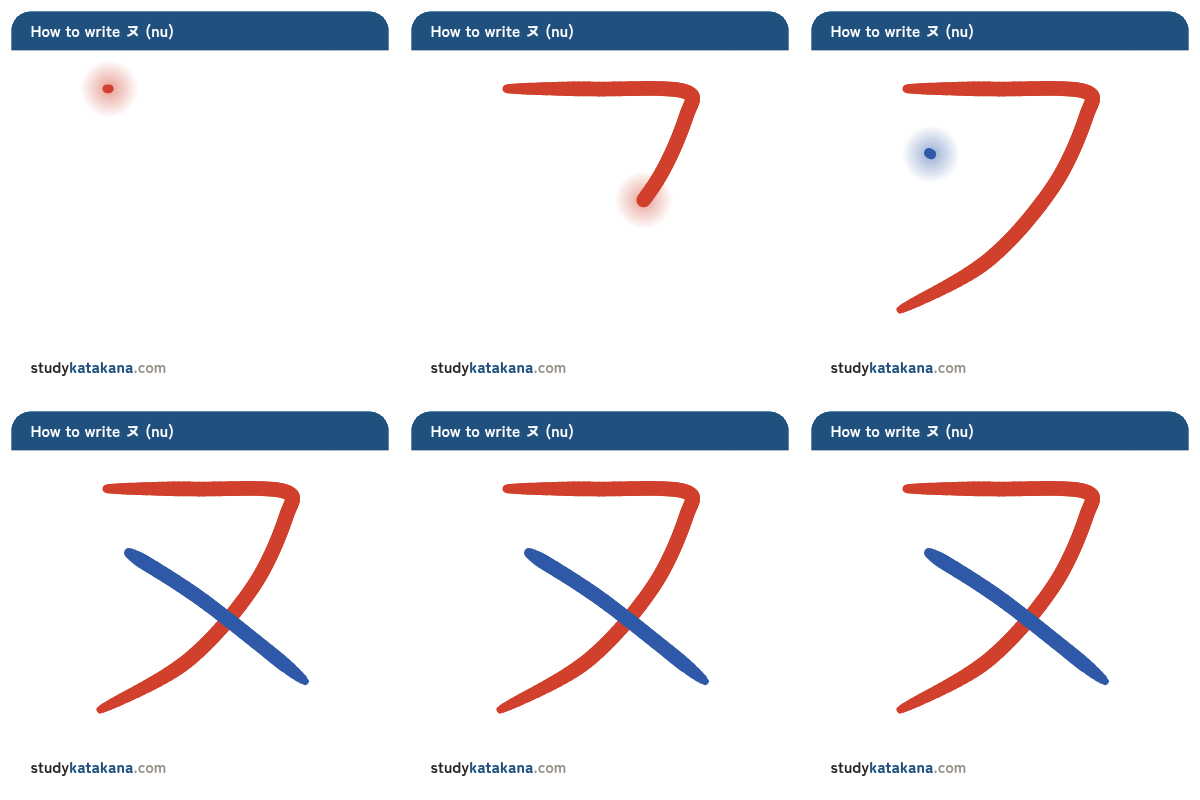
Start at the upper left, draw across to the right, then sweep down and back to the lower left — the top and long diagonal.
A diagonal crossing through it from the upper middle out to the lower right. In ス this second stroke is shorter and doesn't cross — ヌ's crosses.
Origin
Katakana ヌ comes from the right side of the kanji 奴 (nu) — its 又 element. That single component became ヌ; the 女 on the left was dropped.
Common words starting with ヌ
Printable practice sheet
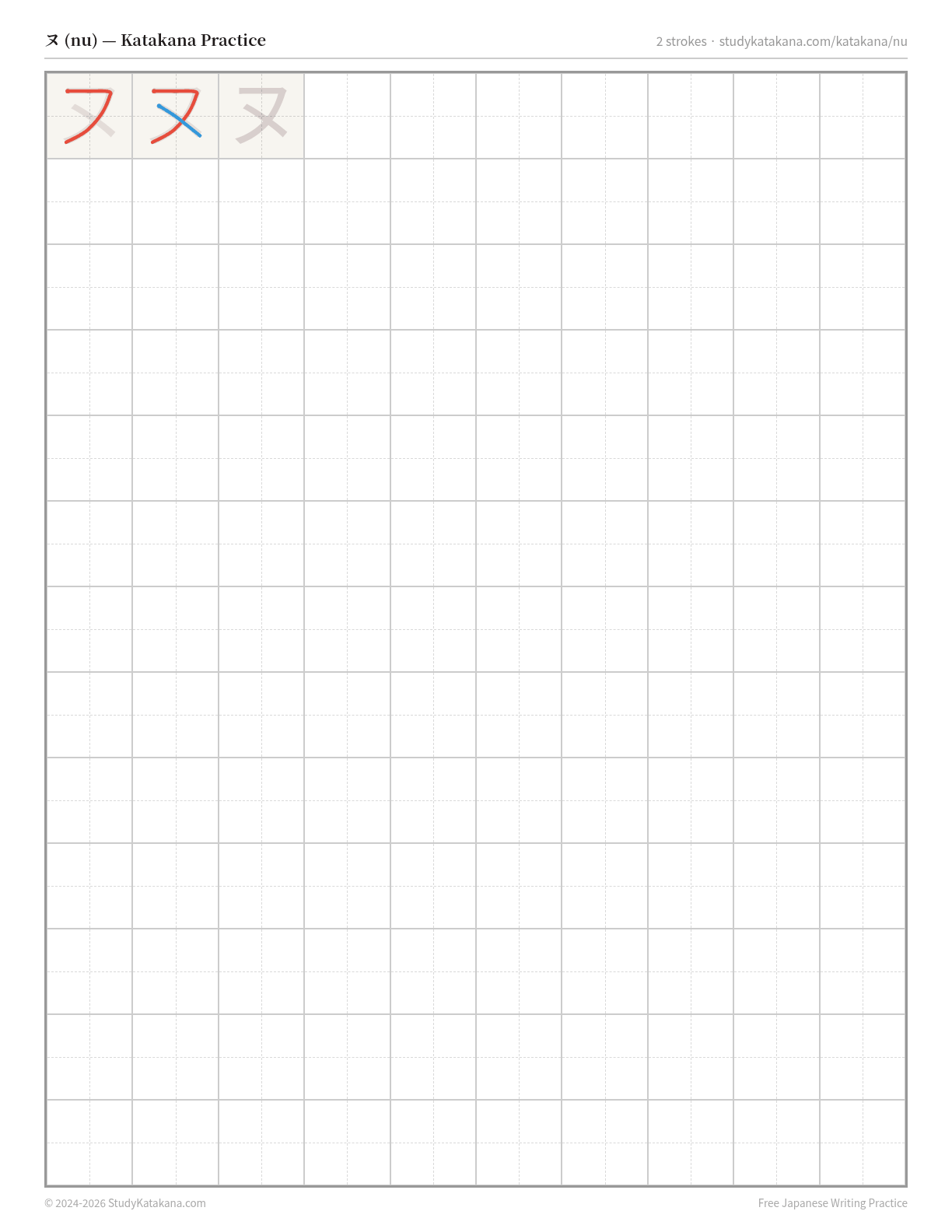
Print this worksheet to practice writing ヌ by hand — the top row shows the stroke order to trace, then fill the blank squares.
Lock it into memory
Reading is only half of it. Write the katakana you’ve learned from memory in the trainer — the ones you struggle with come back sooner, until they stick.