nyo / ニョ
The last NY combined kana — ニ plus a small ョ becomes “nyo,” one syllable. Rare; you'll mostly see it in ニョッキ (gnocchi).
Pronunciation
The compound character ニョ represents the syllable 'nyo'. Extremely rare in modern katakana — most 'nyo' sounds in Japanese appear in native words written in hiragana or kanji.
ニョ is ニ (ni) plus a small ョ, read as one syllable, “nyo.” It's rare in loanwords — the clearest example is ニョッキ (gnocchi) — and appears here and there in onomatopoeia. The combining rule is unchanged.
How to write ニョ
Trace ニョ on the canvas at the top of the page. Animated arrows show each stroke's direction; trace along them and the stroke fills in. Each numbered step below explains what that stroke does.
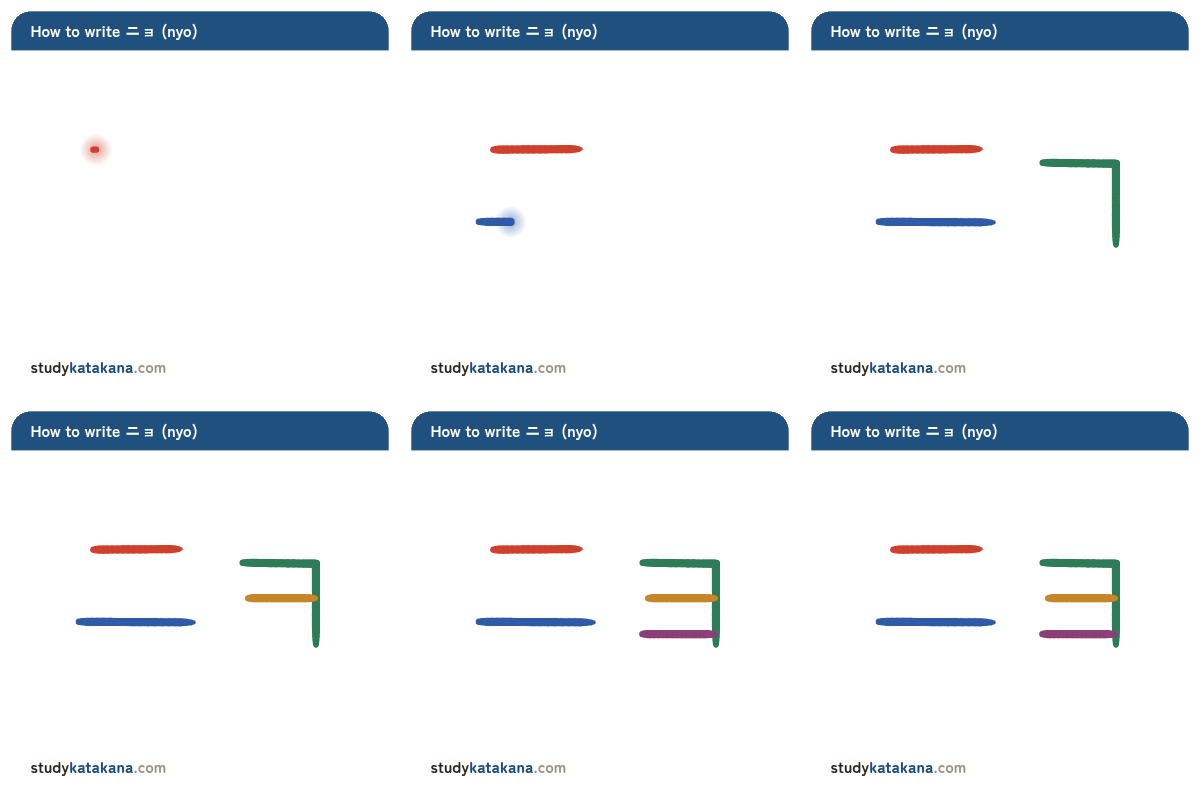
Write ニ exactly: a short horizontal stroke up top, then a longer horizontal below it.
Write a small ョ tucked into the lower right at about half height — a miniature ヨ (a top-and-right stroke, a middle bar, then a bottom bar).
Origin
Katakana ニョ combines ニ — from the kanji 仁 (ni) — with a small ョ (reduced ヨ, from 與). Together they spell a single “nyo” sound.
Common words starting with ニョ
Printable practice sheet
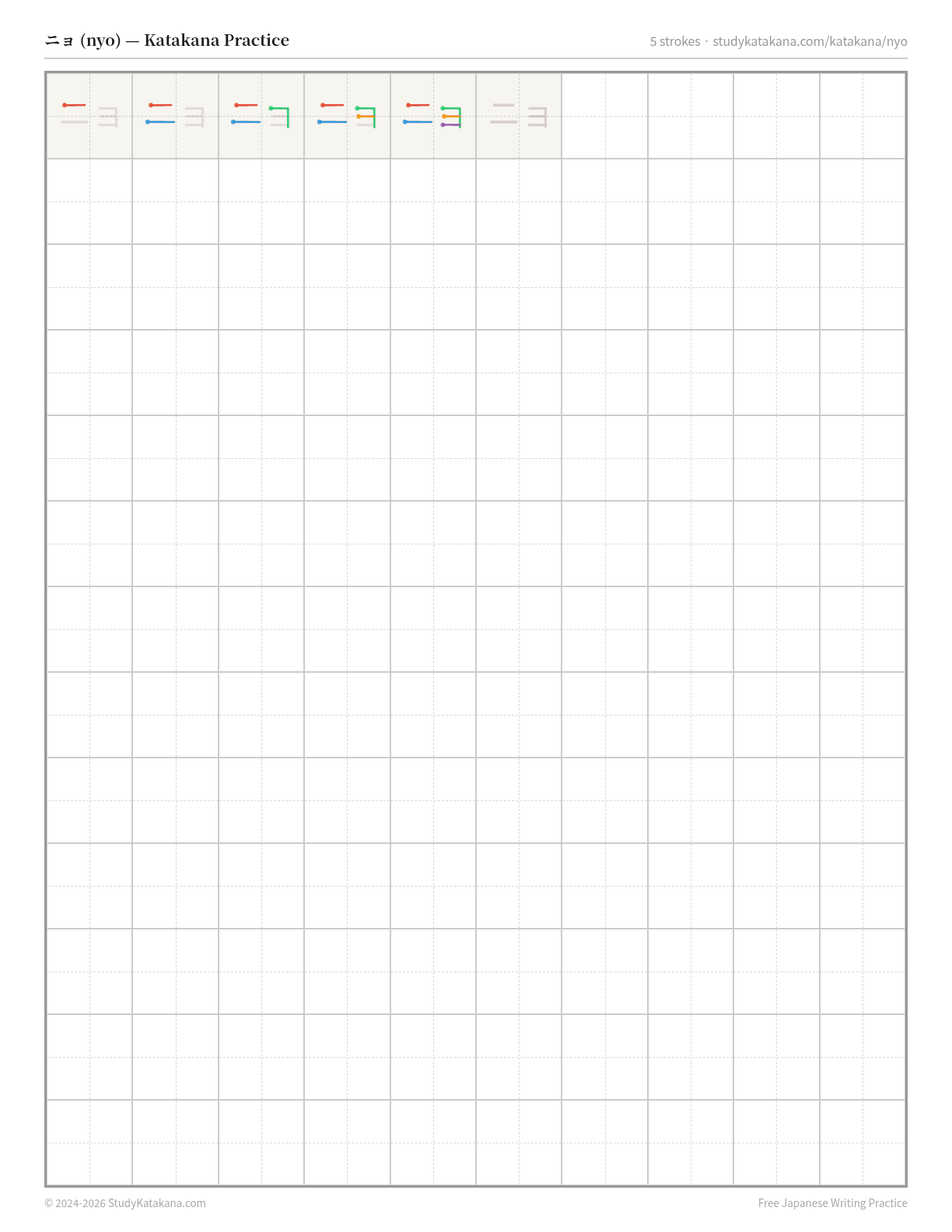
Print this worksheet to practice writing ニョ by hand — the top row shows the stroke order to trace, then fill the blank squares.
Lock it into memory
Reading is only half of it. Write the katakana you’ve learned from memory in the trainer — the ones you struggle with come back sooner, until they stick.