ke / ケ
The fourth K-row katakana — “ke” in three crisp strokes. It fronts cake, case, and ketchup.
Pronunciation
The character ケ represents the syllable 'ke', identical in pronunciation to hiragana け. Common in loanword food names (cake, ketchup) and other everyday items.
ケ carries the same “ke” as hiragana け. Beyond loanwords like ケーキ (cake) and ケース (case), a small ヶ version of it appears in counters such as 一ヶ月 (one month) — but full-size ケ you'll mostly meet in foreign words.
How to write ケ
Trace ケ on the canvas at the top of the page. Animated arrows show each stroke's direction; trace along them and the stroke fills in. Each numbered step below explains what that stroke does.
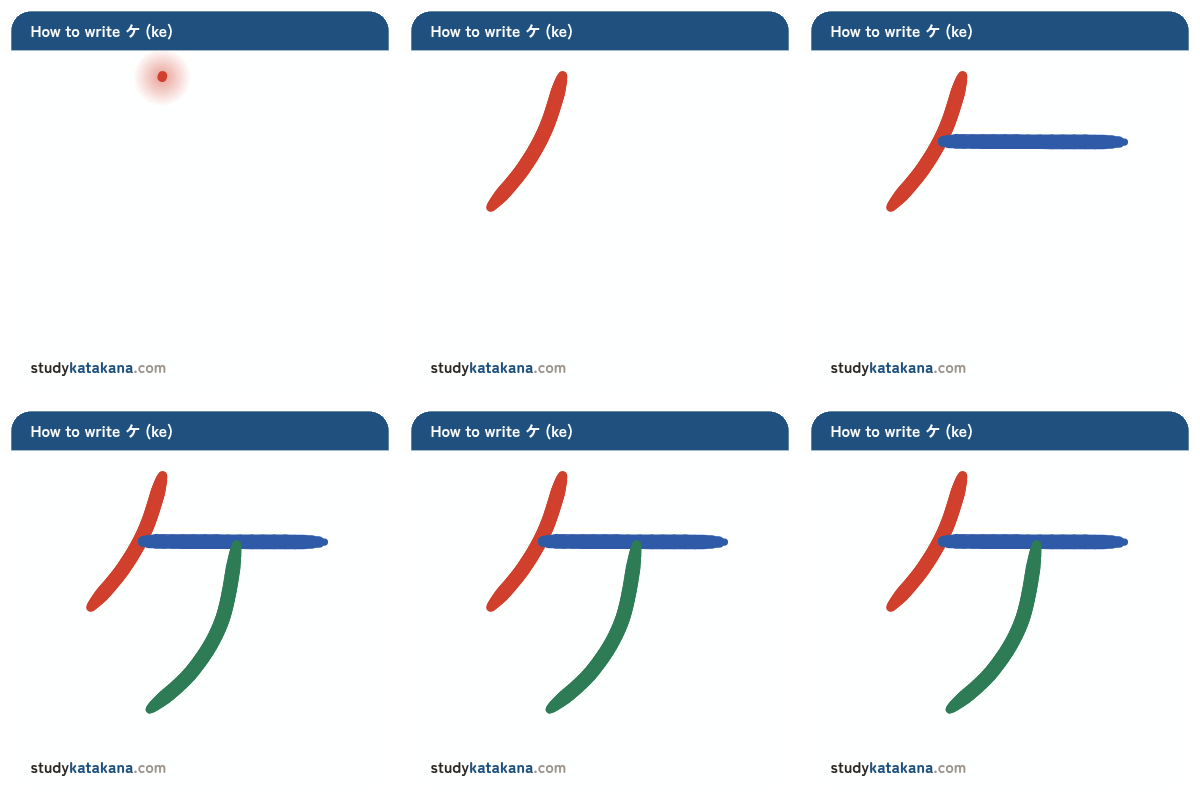
A short diagonal at the upper left, dropping down to the left.
A horizontal stroke across the middle, left to right.
A long diagonal descending from the crossbar down to the lower left — the leg of ケ.
Origin
Katakana ケ was carved from the kanji 介 (ke, “to mediate,” “to come between”). Its top and left strokes became ケ; the symmetrical legs of 介 were left behind.
Common words starting with ケ
Printable practice sheet
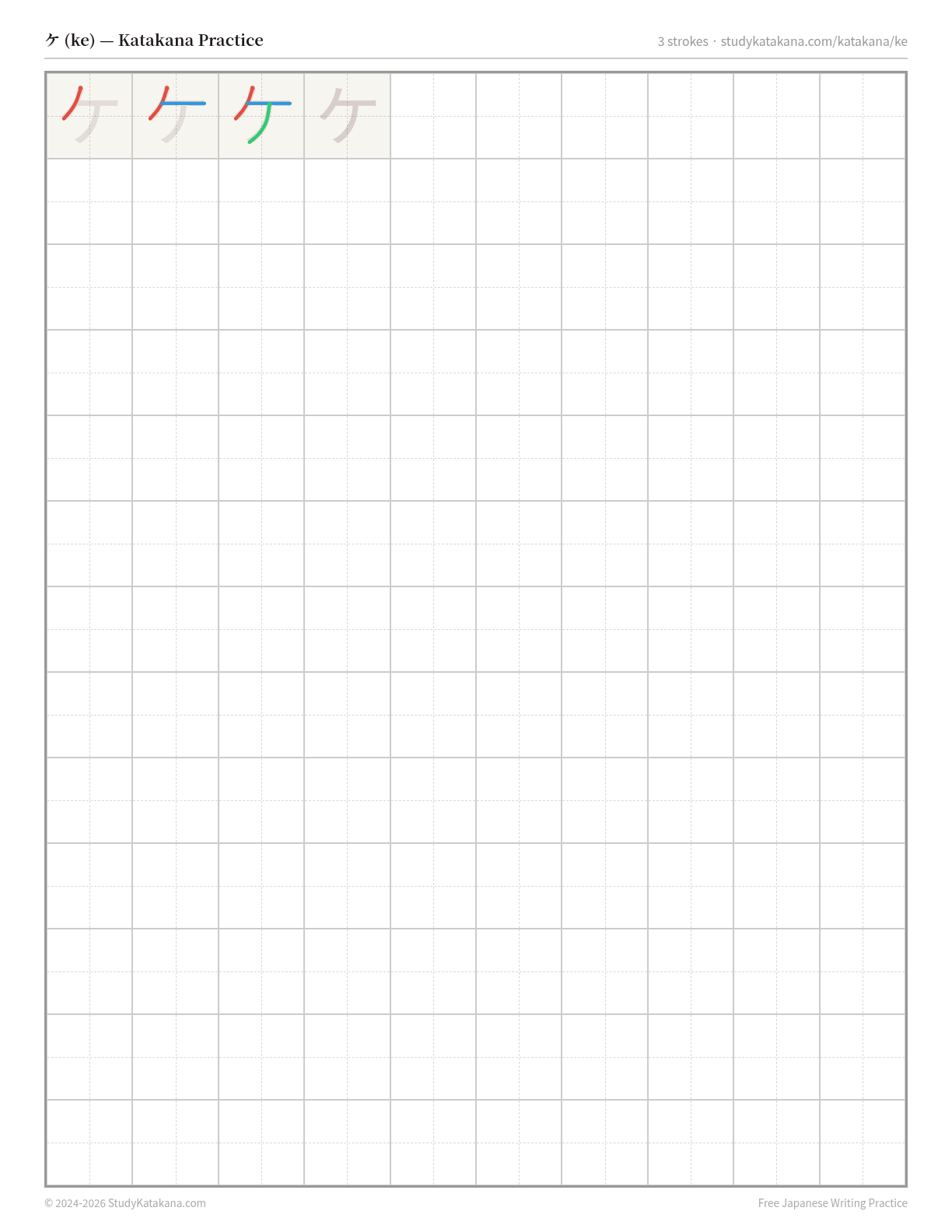
Print this worksheet to practice writing ケ by hand — the top row shows the stroke order to trace, then fill the blank squares.
Lock it into memory
Reading is only half of it. Write the katakana you’ve learned from memory in the trainer — the ones you struggle with come back sooner, until they stick.