bo / ボ
The last of the B row — ホ with a dakuten becomes “bo.” Opens ball, button, and box.
Pronunciation
The character ボ represents the syllable 'bo'. It is ホ with the dakuten that voices 'h' to 'b'. Very common in sports loanwords (ball, basketball, football, boxing) and many compound words.
ボ is ホ (ho) plus the dakuten ゛. With six strokes it's the busiest in the row. It opens loanwords like ボール (ball), ボタン (button), ボックス (box), ボクシング (boxing), and ends リボン (ribbon). Same 木-like ホ shape, voiced to “bo.”
How to write ボ
Trace ボ on the canvas at the top of the page. Animated arrows show each stroke's direction; trace along them and the stroke fills in. Each numbered step below explains what that stroke does.
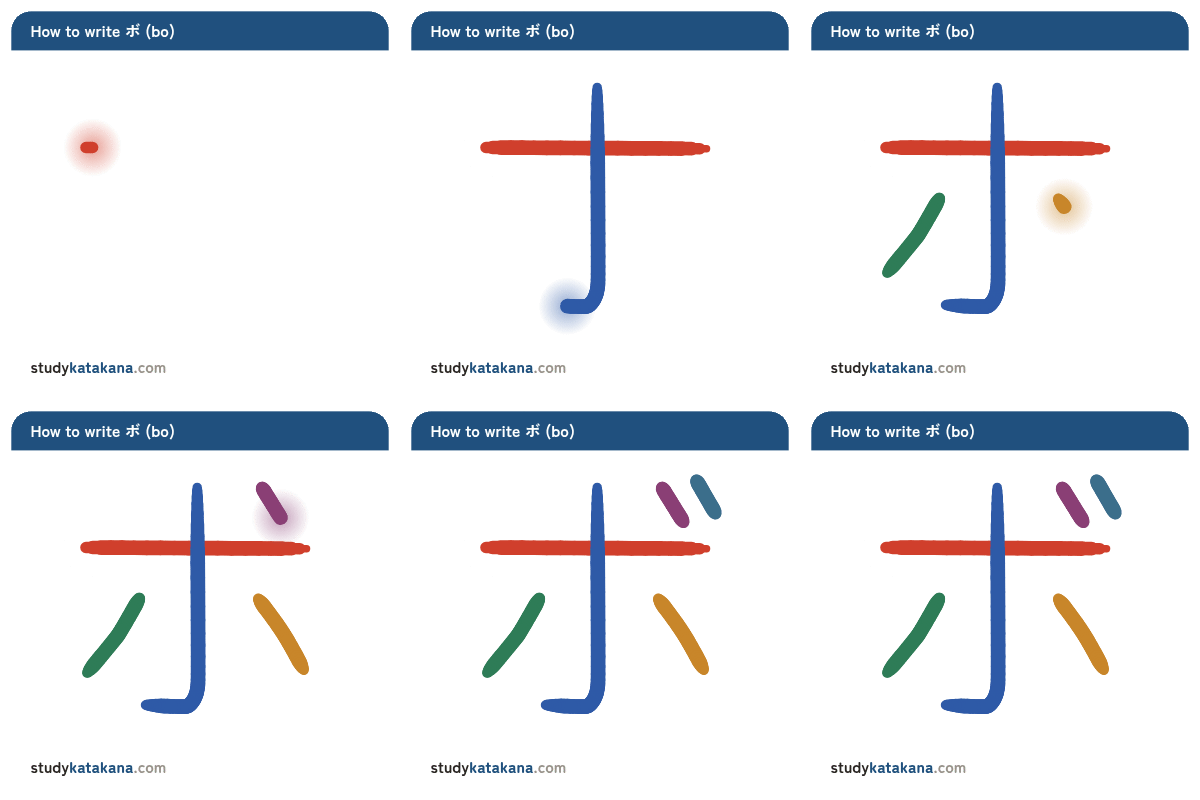
Write ホ exactly: a horizontal bar, a long vertical through it, then two short legs flicking down to the left and right.
Add the dakuten (゛): two small ticks at the upper right — strokes 5 and 6 — sitting above the body.
Origin
Katakana ボ shares its shape with ホ, from the kanji 保 (“protect”). The dakuten ゛ voices “ho” into “bo.”
Common words starting with ボ
Printable practice sheet
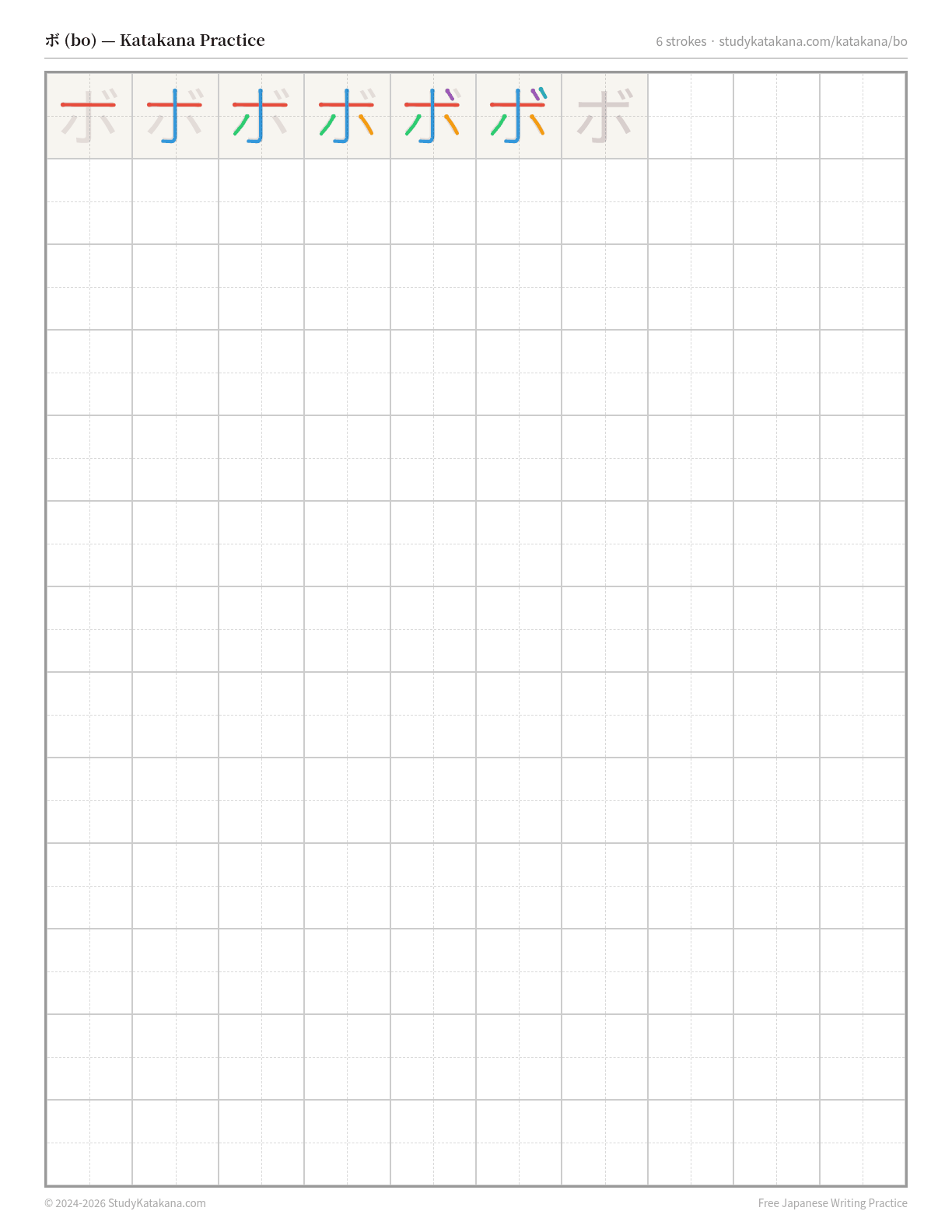
Print this worksheet to practice writing ボ by hand — the top row shows the stroke order to trace, then fill the blank squares.
Lock it into memory
Reading is only half of it. Write the katakana you’ve learned from memory in the trainer — the ones you struggle with come back sooner, until they stick.